
January 25, 2026
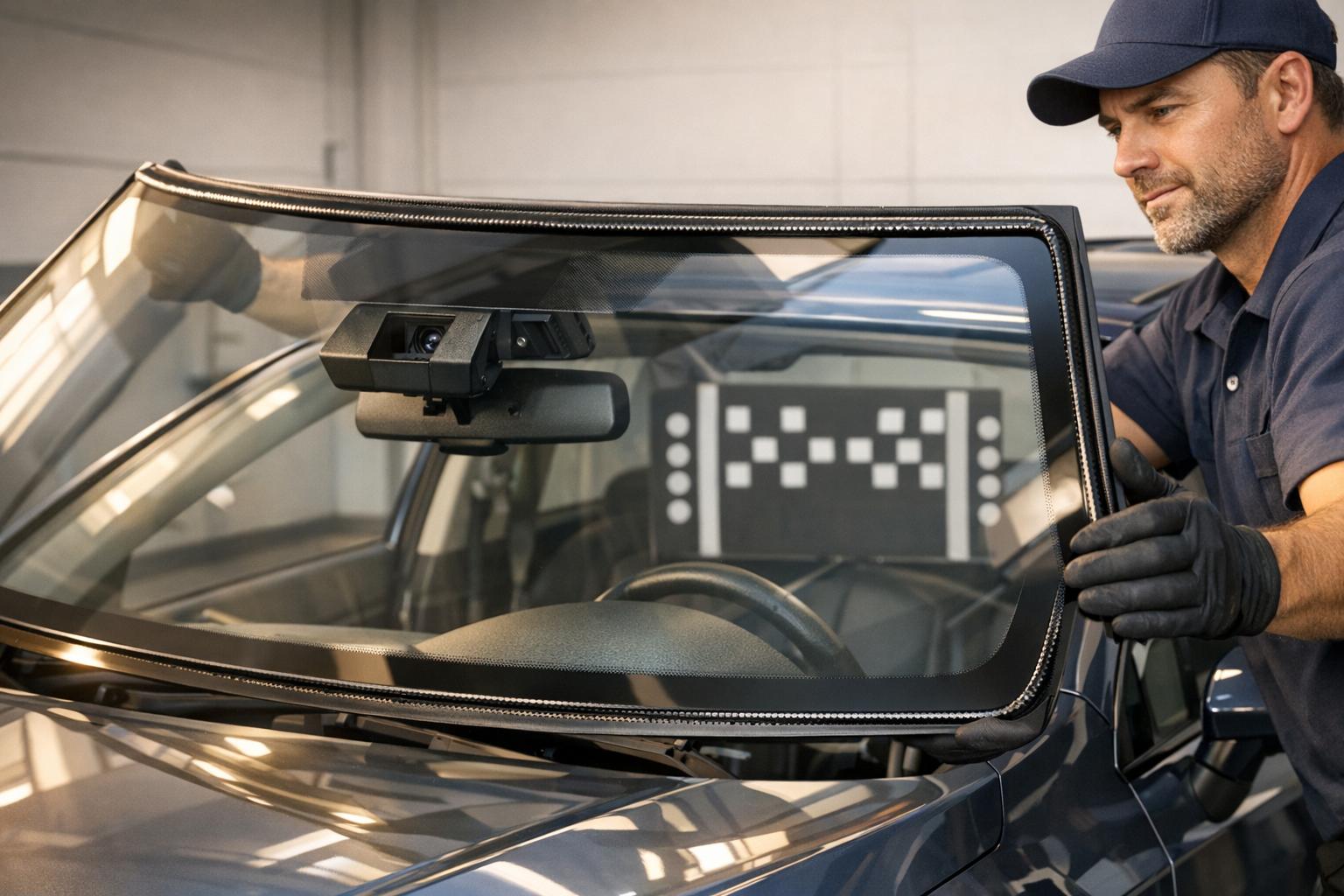
A windshield does more than just shield you from wind and debris - it’s a critical safety component of your vehicle. Modern cars integrate advanced systems like cameras and sensors into the windshield, making precise installation and calibration essential. Here's what you need to know:
Cutting corners on windshield replacement can compromise safety, void warranties, and lead to costly repairs. Always choose professional installation to ensure your vehicle's safety features work as intended.

Windshield Safety Statistics: Structural Support and ADAS Impact
The windshield is securely attached to the vehicle frame using high-strength urethane adhesive, making it a critical structural element. This bond is essential for ensuring both crash protection and proper airbag functionality.
In a rollover accident, the windshield plays a key role in supporting the roof, helping to prevent it from collapsing. According to the Independent Glass Association, the windshield contributes up to 60% of a vehicle's structural integrity during a rollover and 45% in a front-end collision.
The Auto Glass Safety Council explains:
Windshields are bonded directly to the car's frame, adding rigidity and strength. This improves the car's overall crashworthiness and helps protect occupants in rollovers and side impacts, preventing the roof from collapsing inward.
Even minor damage, like a chip or crack, can weaken the windshield and reduce its ability to support the roof. Addressing these issues promptly is essential for maintaining safety.
The windshield isn't just about crash resistance; it's also a key player in airbag deployment. For the passenger-side airbag to function correctly, it relies on the windshield. When the airbag deploys, it inflates upward and presses against the windshield before cushioning the passenger. If the windshield isn't securely bonded to the frame, the force of the airbag could dislodge it, compromising the entire safety system.
SafeWindshields.org emphasizes this point:
The windshield is an integral part of the safety restraint system in your car. It keeps the roof from crushing in on you in a rollover, it allows the airbags to deploy in the correct position to cushion passengers, and prevents you and your family from being ejected in a serious collision.
To ensure this level of safety, professional technicians use specialized urethane adhesives designed to withstand the intense forces of both collisions and airbag deployment. Any weakness in this bond highlights the importance of expert installation.
Modern windshields aren't just glass anymore - they're high-tech hubs for Advanced Driver Assistance Systems (ADAS). These systems rely on embedded cameras and sensors to power essential safety features, making the windshield a critical component of a car's overall functionality. In fact, experts estimate that within the next 5 to 10 years, over 80% of all vehicles will incorporate this technology. This makes proper installation and maintenance of windshields more important than ever - a topic covered in the next section.
One of the most common ADAS components is the forward-facing camera, usually located at the top center of the windshield. This camera collects visual data to support features like Lane Departure Warning, Lane Keep Assist, Traffic Sign Recognition, and Pedestrian Detection. But that's not all - many windshields also house rain sensors for automatic wipers, light sensors for headlights that turn on automatically, and even infrared cameras for advanced night vision systems.
These components are either mounted directly on the windshield or attached to brackets bonded to the glass. This setup means even a slight shift in the glass can throw off the calibration of these sensors. Factors like the curvature, thickness, or even clarity of the glass can interfere with how the system interprets its surroundings.
Aligning ADAS sensors correctly isn't just about functionality - it's a matter of safety. When a windshield is replaced, the removal process disrupts the precise positioning of these sensors, making calibration an absolute must. To illustrate why this is so important, consider this: a car traveling at 30 mph needs about 89 feet to stop on dry pavement. If the ADAS system isn't calibrated, the vehicle might not stop until it’s 8 feet beyond the point of impact.
Calibration processes, which take anywhere from 30 minutes to 2 hours, use either static or dynamic techniques to restore the sensors to their correct alignment. Without this step, the accuracy and reliability of critical safety features could be compromised.
Replacing a windshield isn't just about swapping out glass - it's a precise process that demands specialized skills, top-tier materials, and advanced tools. Your windshield isn’t just a window; it’s a critical part of your car’s structure and integrates key safety features. That’s why getting it right is non-negotiable.
When professionals install a windshield, they follow a step-by-step bonding process designed to ensure the glass becomes a structural component of your vehicle. It starts with thoroughly cleaning and prepping the frame to eliminate contaminants. Then, they apply a consistent bead of high-quality urethane adhesive around the frame’s edge. This adhesive doesn’t just hold the glass - it strengthens the vehicle and helps prevent the roof from caving in during a rollover.
Specialized tools, like suction handles, are used to precisely position the glass without misalignment. Once in place, the adhesive needs time to cure - usually at least an hour. To keep the glass secure during this period, technicians may use retention tape for the first 24 hours. Skipping or rushing these steps can lead to water leaks, annoying wind noise, or worse, a weakened structure that compromises safety.
Precision is especially critical when it comes to modern safety systems. The Auto Glass Safety Council explains:
A vehicle's camera will 'see' differently through a new windshield until calibrated. A windshield is a second lens that the camera must look through. Bend and clarity need to be accounted for; no two pieces of glass are the same.
Even slight differences in how the windshield is positioned - what technicians call "decking" - can throw off your vehicle’s sensors. Certified technicians rely on specialized diagnostic tools and controlled settings to recalibrate Advanced Driver Assistance Systems (ADAS). They ensure every camera and sensor is aligned exactly to factory specifications and provide documentation proving the system is reset. Without this precise calibration, those safety features you rely on could malfunction, turning protective technology into a potential risk. Skipping this step can lead to hazards on the road and costly fixes down the line.
Poor installation not only puts safety at risk but also drives up repair costs. Mistakes like weak adhesive bonds or improperly aligned sensors can compromise both occupant protection and the long-term value of repairs.
A windshield that isn’t bonded correctly might fail to provide the structural support needed during a rollover, which could lead to a roof collapse. Even worse, if the adhesive bond fails, the passenger-side airbag - which depends on the windshield as a backstop - might push the glass out instead of shielding the occupant.
Misaligned sensors add another layer of danger, creating gaps in how safety systems perform. Michael Calkins, Manager of Technical Services at AAA, highlights this issue:
If those standards are not met, the sensors are not going to function properly, and your lane keeping, automatic emergency braking... are not going to be 100% efficient and effective.
These misaligned sensors can also cause frequent false alarms, which might tempt drivers to disable critical safety features altogether. For vehicles with Head-Up Displays, using the wrong type of glass can lead to "ghosting" or double images. Mike Richardson, Technical Expert for Fixed Glass and Glazing at General Motors, explains:
If a technician installs the wrong replacement windshield in a vehicle with a head-up display, you would get a ghosted or double image. You will see actual separation.
These issues not only endanger driver and passenger safety but also set the stage for costly repairs down the line.
Beyond the immediate safety concerns, poor installation can quickly rack up expenses. Modern windshield replacements often involve Advanced Driver Assistance Systems (ADAS) calibration, which can push costs above $1,000. While skipping the calibration might save $300 to $600 upfront, it often leads to more expensive problems later. Poor installation can void warranties, complicate insurance claims, and require additional replacements when non-OEM glass causes sensor or display malfunctions. What might seem like a cost-saving shortcut can easily spiral into a financial headache far greater than the price of doing it right the first time.
Replacing a windshield is about much more than just swapping out a piece of glass. It plays a critical role in your vehicle's safety - from providing the structural support needed to prevent roof collapse during rollovers to serving as a crucial backstop for passenger-side airbags. Modern windshields also house the sensors and cameras that power Advanced Driver Assistance Systems (ADAS). When the installation process is done incorrectly, the risks are serious, ranging from immediate safety concerns to costly long-term issues.
Precision is non-negotiable, especially when it comes to ADAS technology. A slight misalignment - just one degree - can cause a collision avoidance system to be off by as much as 8 feet at a distance of 100 feet. That kind of error isn't just inconvenient; it could be life-threatening.
Windshields today are packed with advanced technology, making specialized expertise essential for proper installation. As the Auto Glass Safety Council emphasizes:
The ADAS system will not be accurate without calibration after a windshield installation.
This highlights why choosing certified technicians isn't just a good idea - it's a necessity. Proper sealing, high-quality glass, and precise calibration ensure that your vehicle performs as it should. More importantly, they help protect lives. Cutting corners on windshield replacement might save a little now, but it could lead to much higher costs - and risks - down the road.
Professional windshield replacement is more than just swapping out broken glass - it’s a crucial part of your vehicle’s safety system. Modern windshields often work hand-in-hand with Advanced Driver Assistance Systems (ADAS), which include features like lane-keeping assist, automatic emergency braking, and adaptive cruise control. These systems depend on cameras and sensors that are mounted on or near the windshield. If the windshield isn’t installed or calibrated properly, these safety features might not work as intended, putting you and others at risk.
Beyond technology, your windshield plays a key role in your car’s structural integrity. It helps the vehicle maintain its strength during a collision and ensures airbags deploy correctly. A poorly installed windshield can lead to a compromised seal, a weaker frame, or misaligned components, all of which increase the danger during an accident. By choosing professionals for the job, you can be confident that the glass is installed, sealed, and calibrated to meet safety standards, keeping everyone on the road safer.
Modern windshields are crafted to integrate smoothly with Advanced Driver Assistance Systems (ADAS), housing built-in sensors and cameras. These elements play a vital role in supporting features such as lane departure warnings, adaptive cruise control, and automatic emergency braking.
After a windshield replacement, these systems often need precise calibration to work as intended. Ensuring the cameras and sensors are properly aligned is key to maintaining both safety and performance. Even small misalignments can disrupt the functionality of ADAS features, which is why professional installation and calibration are absolutely essential during the replacement process.
Recalibrating sensors after replacing a windshield is essential for keeping Advanced Driver Assistance Systems (ADAS) working as they should. These systems, which include features like lane departure warnings, collision avoidance, and adaptive cruise control, depend on precisely aligned sensors. If recalibration is skipped, these safety features might not function properly, increasing the risk of accidents.
Many modern windshields are equipped with built-in cameras and sensors that are key to ADAS. Even a tiny misalignment during the replacement process can cause inaccurate readings or trigger system errors. By opting for professional recalibration, you ensure these components operate correctly, preserving both the safety and performance of your vehicle.
