
January 4, 2026
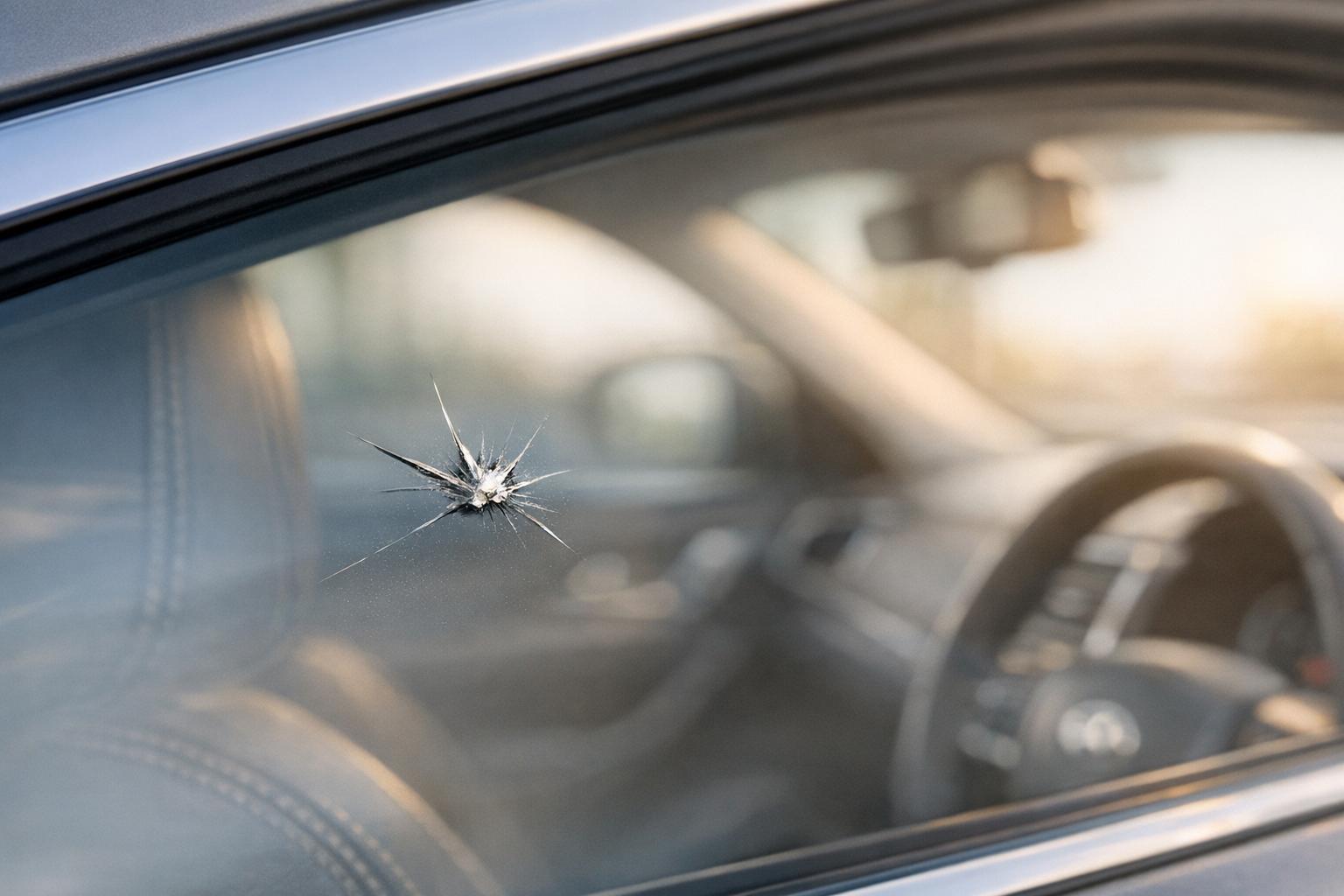
When your car windows are cracked, chipped, or stuck, the decision to repair or replace them depends on the severity and type of damage. Here's what you need to know:
Timely action is crucial. Small issues, like chips or sluggish windows, can escalate into costly repairs or safety hazards. Professional services ensure proper repairs, use high-quality materials, and restore your vehicle's safety and functionality.
Not all windshield damage requires replacement, but knowing the limits of repair is crucial. Chips smaller than a quarter and cracks under 3 inches are often repairable, though some advanced methods can handle cracks up to 14 inches. However, cracks that extend to the edge of your windshield are a red flag. This type of damage compromises the adhesive seal that holds the glass to your vehicle's frame, reducing its overall strength. Cracks within the driver’s line of sight are another concern, as they can distort your view and make driving hazardous.
The depth of the damage is also a key consideration. Windshields are made of two glass layers with a plastic interlayer. As Daniel Snow, VP of Operations at Glass.com, explains:
If the damage is through the outer and inner layer of glass, it is too deep to perform a windshield repair.
If your windshield has more than two or three chips or cracks, its structural integrity is likely too compromised for repair to be a safe option. Additionally, deep cracks often collect dirt and debris, which can interfere with the resin bonding process, making replacement the only viable solution. Damage like this not only weakens the windshield but also makes repairs unsafe and unreliable.
Delaying a windshield replacement once the damage exceeds repairable limits puts your safety at serious risk. According to the Auto Glass Safety Council, your windshield provides up to 45% of your vehicle’s structural integrity in a front-end collision and up to 60% during a rollover accident. A weakened windshield might fail during an accident, leading to severe consequences: it could collapse, hinder airbag deployment, or even allow passengers to be ejected from the vehicle.
Environmental factors can worsen the damage over time. Freezing temperatures cause water trapped in cracks to expand, while extreme heat makes the glass flex and contract. When combined with road vibrations, these conditions can turn minor damage into major issues. Cherise Threewitt, Contributing Editor at The Car Connection, highlights the danger:
The biggest potential consequence of delaying a windshield replacement is that the windshield could cave in while driving, which is extremely dangerous.
Driving with a compromised windshield also opens you up to legal fines, and the cost of repair can skyrocket if the damage worsens. What might start as a $50 repair could balloon to over $1,000 if neglected. Beyond the financial impact, the risks to your safety make timely replacement non-negotiable.
If your power windows are acting up, sluggish movement is often the first clue. A window that rises or lowers slower than usual might be signaling motor wear or excessive stress on the regulator. Catching this early can save you from dealing with a completely stuck window later, especially in challenging weather conditions.
Unusual noises are another red flag. Grinding or rattling sounds often mean there’s a broken track guide or debris stuck in the tracks. Meanwhile, a buzzing sound could indicate that the electric motor is straining to function.
Misalignment is also a telltale sign. If your window moves unevenly, gets stuck, or sits crookedly in its frame, it could be off its track or suffering from a guide failure.
The worst-case scenario is complete failure, where the window stops moving altogether. This could be caused by anything from a blown fuse or faulty switch to a dead motor or a broken regulator. In some cases, the window might even drop into the door panel.
A warning from Carwise highlights the importance of addressing these issues promptly:
A broken window regulator could interfere with your ability or the ability of your passengers to exit your vehicle if you are trapped inside in the moments following a collision, so you shouldn't delay getting it repaired.
When these problems progress beyond minor fixes, more extensive repairs or replacements are often needed.
In many cases, technicians opt to replace the entire component rather than attempt to repair a worn-out motor or damaged regulator.
For side and rear windows, the situation is unique. These are crafted from tempered safety glass, which is heated to over 1,100°F during manufacturing. This process ensures that, upon impact, the glass shatters into small, granular pieces rather than large, sharp shards, making replacement the only viable option in the event of damage.
The type of window regulator in your car can also determine which part is most likely to fail. Scissor-style regulators, which use thick steel components in an "X" pattern, rely on a durable but often overworked motor that tends to wear out first. On the other hand, cable-operated regulators use a system of vertical cables and pulleys. These are more prone to issues like snapped cables or broken plastic pulleys due to the high tension involved. When these parts fail, the entire regulator assembly usually needs to be replaced.
Fortunately, most skilled technicians can handle power window repairs or side window replacements in about an hour, ensuring you’re back on the road quickly.
Water leaks are often the most noticeable sign of seal trouble. If you find moisture on your door panels or floorboards after rain or a car wash, it’s likely that your weatherstripping has worn out. To confirm, try the touch test: feel for dampness on your upholstery or carpet after exposure to water.
Unusual noises like whistling or hissing at high speeds are another red flag. These sounds usually mean air is sneaking through gaps in the weatherstripping. If pressing on the area stops the noise, it's a clear sign the seal needs attention.
Fogging between glass layers or drafts around the frame suggests seal failure, which can also allow dirt to enter the vehicle.
To stay ahead of these problems, inspect your seals visually every few months. Look for cracks, brittleness, or sections where the rubber has pulled away from the frame. Keep your seals in good shape by applying silicone lubricant to window tracks and weatherstripping every six months. This helps the rubber stay flexible and ensures smooth operation.
Spotting these issues early can save you from bigger headaches down the road.
Replacing worn-out seals does more than just fix leaks - it improves comfort, cuts down on noise, and helps protect your vehicle’s structure. New seals restore proper weatherproofing, keeping water out and shielding critical components from damage. Persistent leaks can lead to mold growth and even harm electronic systems inside the car.
Fresh seals also make a big difference in noise reduction. With new weatherstripping, you’ll notice less wind noise and road sounds, creating a much quieter and more pleasant cabin environment. Plus, better seals help maintain consistent interior temperatures, which eases the workload on your heating and cooling systems.
There’s also a safety aspect to consider. A damaged windshield seal can fail during airbag deployment, and it plays a crucial role in maintaining the vehicle's structure during a rollover. While seal repairs typically cost between $60 and $90, ignoring the problem could lead to a full windshield replacement, which can cost anywhere from $800 to $1,000.
Investing in seal replacements can save you money and ensure your vehicle stays safe, comfortable, and protected.
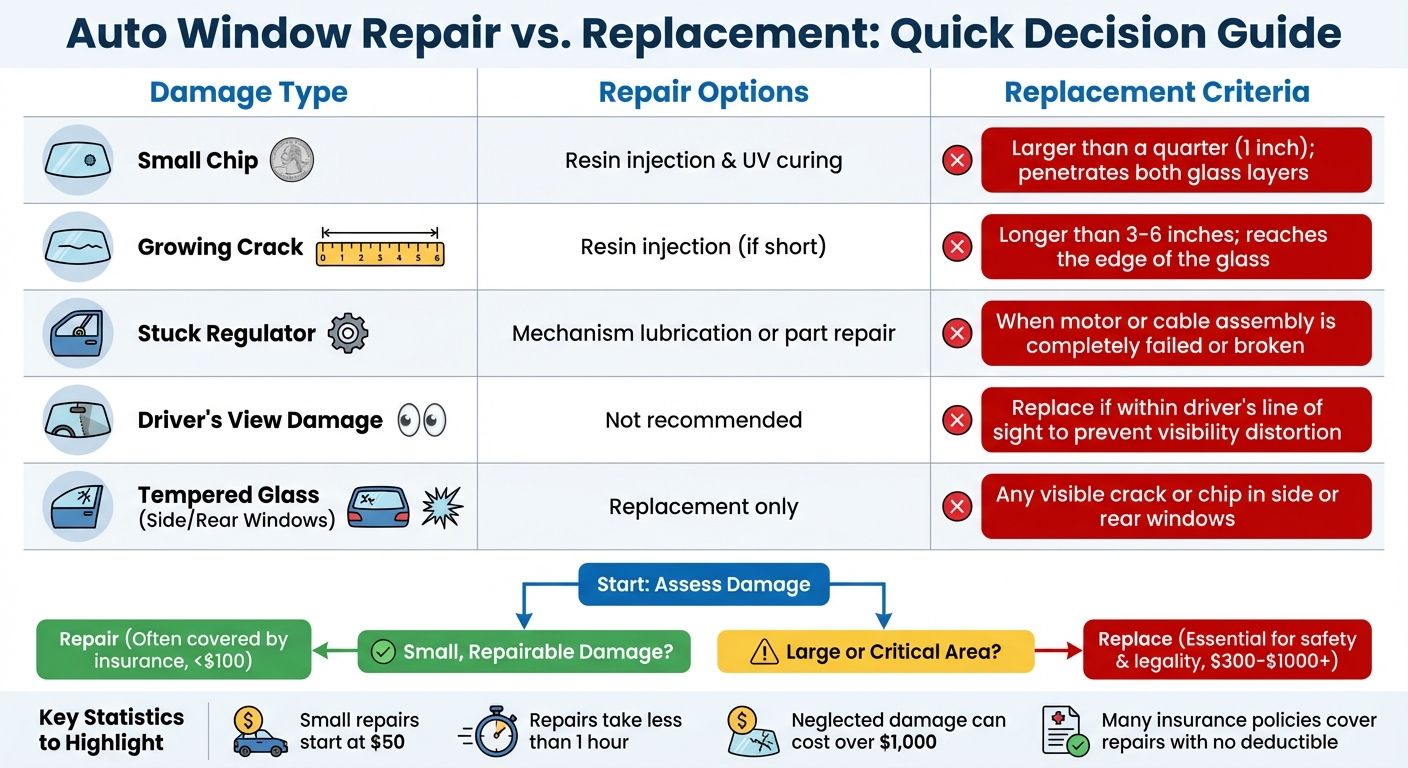
Auto Window Repair vs Replacement Decision Guide
When faced with damaged auto glass, the choice between repair and replacement depends on a few key factors: the size and location of the damage, the type of glass involved, and whether the issue is mechanical or structural. Making the right call can save you money and ensure your safety.
Small chips and short cracks are usually repairable. If the damage falls within repairable limits, it can be fixed using a resin injection process. These repairs are quick - typically taking less than an hour - and start at around $50. However, if the damage is in your direct line of sight, replacement is the safer choice. As Daniel Snow, Vice President of Operations at Glass.com, points out, repair resins can create minor distortions that might interfere with visibility.
Location is also critical. A crack that reaches the edge of your windshield compromises the glass's structural integrity and requires a full replacement. Similarly, if the damage penetrates both layers of laminated glass, repair won’t restore the necessary strength. For side and rear windows, which are made from tempered glass, any visible damage means replacement is mandatory. Tempered glass shatters into small fragments rather than cracking, making repair impossible.
Mechanical problems bring a different set of challenges. If your window won’t move, the issue often lies with the regulator or motor. In many cases, these components can be repaired or replaced individually. However, if the mechanism is completely seized or the glass is shattered, full replacement becomes necessary.
| Damage Type | Repair Options | Risks of Ignoring | Replacement Criteria |
|---|---|---|---|
| Small Chip | Resin injection & UV curing | Can spread into a larger crack; dirt buildup prevents a clean repair | Larger than a quarter (1 inch); penetrates both glass layers |
| Growing Crack | Resin injection (if short) | Compromises structural integrity; may lead to vehicle inspection failure | Longer than 3–6 inches; reaches the edge of the glass |
| Stuck Regulator | Mechanism lubrication or part repair | Safety risk (trapping occupants); potential interior water damage | When the motor or cable assembly is completely failed or broken |
| Driver's View Damage | Not recommended | Impaired visibility; dangerous glare or distortion at night | Replace if within the driver's line of sight to prevent visibility distortion |
| Tempered Glass | Replacement only | Total shattering; exposure to the elements and increased theft risk | Any visible crack or chip in side or rear windows |
Acting quickly is essential for effective repairs or replacements. Delaying repairs allows dirt to accumulate in cracks, making a clean repair impossible. Temperature changes and road vibrations can also turn small chips into long cracks that require a costlier replacement. On the bright side, many comprehensive insurance policies cover glass repairs with no deductible, while replacements often require paying the full deductible.
Custom Collision’s Auto Window Replacement Services offer timely and professional solutions, ensuring your vehicle is safe and road-ready. Don’t wait for minor damage to turn into a major problem - explore how their expertise can help you today.

When window damage goes beyond repair, replacement becomes the only safe option. With over 30 years of experience, the ASE-certified and Blue Seal-trained technicians at Custom Collision are equipped to handle everything from cracked windshields to shattered side windows and malfunctioning power windows.
"Whether it's a cracked windshield, a shattered side window, or a malfunctioning power window, we have the expertise to handle it with precision and care." - Custom Collision
Custom Collision uses OEM-approved parts and premium materials to ensure your vehicle's safety and performance are fully restored. They simplify the repair process by offering deductible assistance, financing options, and full insurance coordination. Their team also takes the time to explain the repair process clearly, so you're informed at every step. This dedication to quality and transparency has earned them a reputation as the go-to choice in the region.
Serving McMinnville, Smithville, and the surrounding Middle Tennessee areas, Custom Collision puts customer satisfaction and convenience first. What sets them apart is their transparency and customer-focused approach. You can even get a free estimate and use their online tools - like the Windshield Crack Severity Checker and Windshield Crack Repair Guide - to evaluate the damage before visiting their shop.
The process begins with a detailed inspection to determine whether your window can be repaired or needs full replacement. For shattered windows, technicians use shop vacuums to remove all glass fragments.
During installation, the damaged glass and hardware are removed, the frame is cleaned, and adhesive is applied for windshields. The new glass is carefully aligned using specialized tools to ensure precision. For side windows, technicians also test the power window regulator and wiring to confirm everything is functioning properly before reassembly. A final inspection guarantees that the alignment and seals meet safety standards. These meticulous steps ensure your vehicle is safe and ready for the road.
After the replacement, wait at least one hour before driving and keep a window slightly open for 24 hours to protect the new seal. Avoid high-pressure car washes during this period to ensure the adhesive sets properly.
Taking care of window repairs or replacements promptly is crucial for your vehicle's safety and functionality. We've explored how minor damage, like small chips, can quickly turn into larger cracks due to temperature changes and road vibrations. Beyond the financial cost, damaged glass compromises your car's structural strength, reducing the windshield's ability to support airbag deployment and prevent roof collapse during rollovers. In fact, the windshield contributes up to 45% of your car's structural integrity in front-end collisions and up to 60% in rollover accidents.
Mechanical failures, like a broken window regulator, also pose serious safety concerns. For instance, it could prevent passengers from exiting the vehicle in an emergency. Leaks and seal failures can lead to moisture damage, harming your car's interior and electronics, which can lower its long-term value.
Opting for professional replacement services ensures your vehicle is restored to its original safety and performance standards. Skilled technicians use the right adhesives, recalibrate safety systems, and rely on OEM-approved materials that comply with federal safety guidelines. Plus, many insurance providers waive deductibles for these repairs, making it easier to address the issue promptly.
When it comes to window damage, act quickly. Whether it's a small chip, a crack in your line of sight, or a window that won't roll down, timely action is essential. Cracks longer than 14 inches typically require a full replacement, and damage in the driver's field of vision could result in traffic violations or failed inspections. Professional services not only repair the visible damage but also protect your vehicle's structural integrity, ensure safety system calibration, and preserve its resale value. Waiting to fix these issues only increases risks for you and your passengers.
If the damage to your car window is too extensive for a safe or effective repair, it's time to think about replacing it. Here are some situations where a replacement is the better option:
Replacing the window promptly keeps your vehicle safe, functional, and looking good, while also helping you avoid bigger problems later on.
Delaying a windshield replacement might seem harmless at first, but it can quickly escalate into a serious safety concern. Small cracks or chips don’t just stay put - temperature fluctuations and road vibrations can make the damage spread, potentially blocking your view of the road. In some states, driving with impaired visibility could even land you a traffic ticket or worse, contribute to an accident.
Beyond visibility, a damaged windshield compromises your car’s structural strength. It plays a key role in keeping the cabin stable during a collision and ensuring airbags deploy correctly. When the damage becomes too severe, the glass can’t perform these critical safety functions, putting you and your passengers at greater risk.
There’s also the risk of hidden costs if you wait too long. Cracks can let water seep into your car, leading to leaks, mold, or even damage to your vehicle’s electronics and interior. Acting quickly can save you from the expense of a full replacement and help preserve your car’s safety, performance, and overall value.
If your car's window seals are damaged, you might notice water seeping into the cabin after rain, feel a draft even when the windows are fully closed, or hear more wind noise while driving. Other signs include cracked or brittle rubber around the window or even rust forming on the metal frame. To confirm, you can run a hose over the window and check for leaks or feel along the edges for air escaping.
The most effective fix is to replace the weatherstripping entirely. Start by carefully removing the old seal to avoid scratching the frame or glass. Once the area is exposed, clean it thoroughly to get rid of any leftover adhesive or debris. Align the new seal and press it firmly into place. If you're using adhesive-backed strips, a thin layer of automotive-grade silicone sealant can help ensure a watertight bond. After installation, test your work by running water over the window or checking for any drafts.
Replacing window seals is relatively inexpensive, with parts usually costing between $20 and $100. The process is straightforward and can be completed in about an hour with basic tools. Addressing damaged seals early can prevent water damage, mold growth, and rust, keeping your car in better shape and more comfortable to drive.
